

For travellers hoping to experience this in a more meaningful way, we asked Off The Map Travel – Nordic specialists creating bespoke journeys that use foraging as a way into landscape, culture and local knowledge, rather than treating it as a standalone activity – to guide us through what to look for, and where to begin.
Swedish Lapland
Foraging in Swedish Lapland is shaped by the intensity of the Arctic environment, where a short growing season produces a surprisingly rich variety of ingredients. Late summer brings bilberries and cloudberries, while forests yield herbs and edible plants that have long supported life in remote northern communities. Rivers and lakes add another dimension, with fish species such as Arctic char, pike and perch forming part of the wider food landscape.
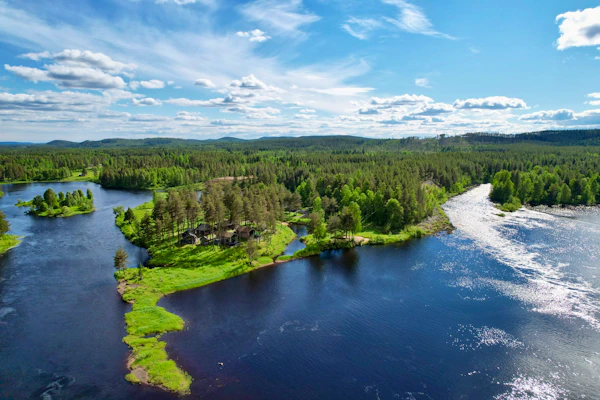
What makes this region particularly compelling is the way food is tied to culture and survival. Local guides do more than identify what can be gathered, they offer insight into how it has been used, preserved and understood over generations. Central to this is Eva Gunnare, a Lapland-based food and cultural guide who is an integral part of Off The Map Travel's Fish, Forage and Feast itinerary. Her walks focus on ingredients most visitors would pass by, from wild herbs and vitamin-rich berries to inner tree bark once used in traditional Sámi food culture, combining practical knowledge with storytelling and a strong sense of place.
The best time to visit is late summer into early autumn, when both berries and mushrooms are at their peak.
Where to stay:
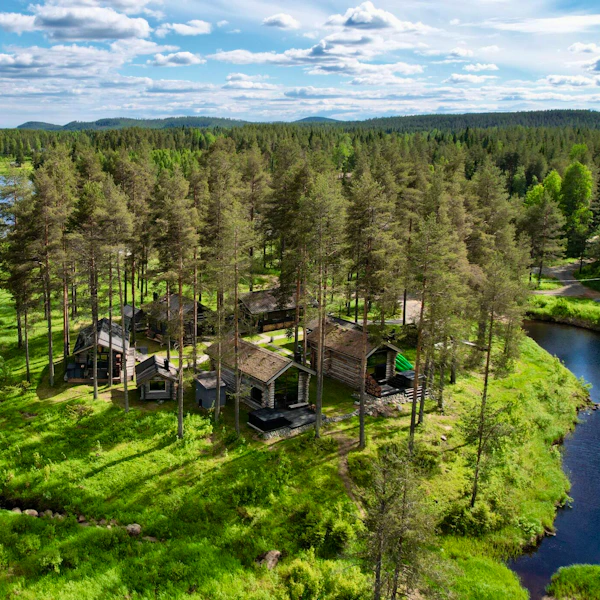
Arctic Retreat offers a deeply immersive base, with secluded cabins set within the forest and experiences that combine foraging, fishing and Nordic wilderness skills, alongside simple comforts such as wood-fired saunas and riverside views.
Images: @igraeme ©ArcticRetreat
Boreal Forests
Across inland Sweden, boreal forests offer the most recognisable and accessible foraging landscape in the Nordics. This is a world of dense woodland, clear lakes and long summer days, where ingredients grow in abundance and are easy to find. Late summer into early autumn is the key season, when chanterelles, porcini and funnel chanterelles appear, alongside bilberries and lingonberries carpeting the forest floor.
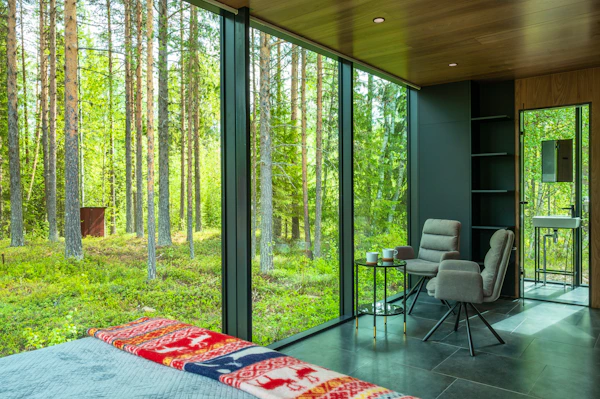
There is a simplicity to foraging here that makes it particularly appealing. You do not need specialist knowledge to enjoy it, just time and a willingness to slow down. Walking through the forest, noticing what grows where, and returning with something you have gathered yourself becomes part of the experience. It pairs naturally with lake swimming, paddling and long, unhurried days outdoors.
Where to stay:
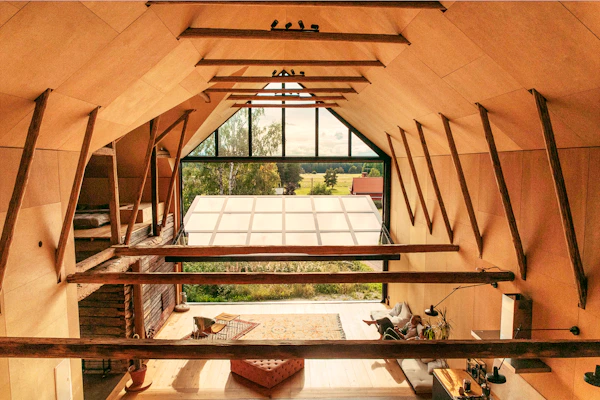
Logger's Lodge is a quiet timber hideaway surrounded by forest, ideal for stepping straight into nature, while Hello Sunnanhed offers a more relaxed lakeside setting with a creative, hands-on feel. Both place you directly within landscapes where foraging forms part of the rhythm of the day.
Image: ©Eric Borg
River Landscapes
South of the Arctic, Sweden's river landscapes offer a softer, more fluid take on foraging. Here, water shapes the experience as much as the forest, with herbs, berries and edible plants growing along riverbanks and wetlands. It is less about filling a basket with mushrooms and more about noticing the smaller details, the scent of wild plants, the shift in terrain, and the way the landscape unfolds as you move through it.
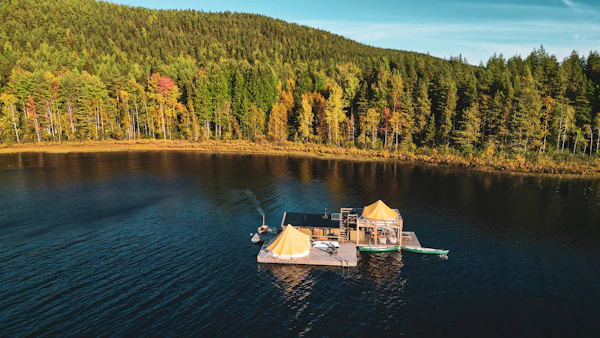
These areas are particularly appealing in summer and early autumn, when everything feels lush and accessible. Foraging is often combined with time on the water, whether paddling or drifting slowly along the river, creating an experience that feels immersive without being demanding.
Where to stay:
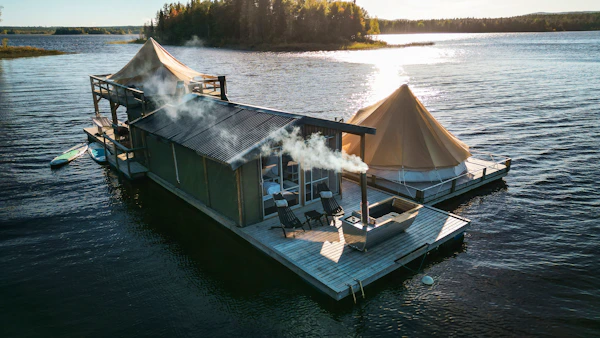
Floating Safari Camp sits directly on the water, offering an off-grid experience with a private sauna and hot tub, and easy access to guided walks focused on herbs, berries and wild teas.
Norwegian Fjords
In Norway's fjord regions, foraging is shaped by the meeting of mountains, forests and sea. Inland slopes still produce berries, herbs and mushrooms in late summer and autumn, but the proximity to the coast introduces a different set of ingredients, including edible sea plants and a stronger connection to seafood.
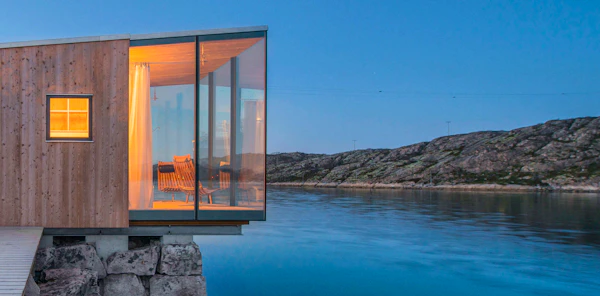
This combination gives the region a distinct character. Food here often reflects both land and sea, and foraging tends to sit within a broader experience, whether that is hiking through steep terrain or spending time on the water. The scale of the landscape adds to the sense of drama, making the experience feel less predictable and more closely tied to the elements.
Late summer into early autumn is the best time for land-based foraging, while coastal ingredients can be explored more flexibly depending on location and conditions.
Where to stay:
Manshausen Cabins offers a striking island setting where fishing and sea-led dining take centre stage, while Storfjord Hotel, set above the Sunnmøre fjords, provides a more refined base with experiences that include both forest foraging and chef-led tastings.
Nordic Islands
On the Nordic islands and outer coasts, foraging takes on a different character again. Exposed to wind and salt, these landscapes produce ingredients adapted to coastal conditions, including herbs, berries and seaweed. It is a more nuanced, often more curated experience, shaped as much by the environment as by what can be gathered. Places such as Bornholm in Denmark offer a particularly appealing balance, combining a strong local food culture with easy access to nature, while Greenland brings a more remote, elemental perspective, where foraging sits alongside wider nature-based experiences.
Late summer remains one of the most rewarding times to visit, particularly for berries, though coastal foraging can extend across a longer season depending on what is being explored.
Where to stay:
On Bornholm, Stammershalle Badehotel provides a comfortable base for exploring the island's food scene and coastline, while Glacier Lodge Eqi offers a more remote, nature-led experience shaped by Greenland's vast landscapes.
Nordic Foraging
Can you legally forage in the Nordic countries?
Yes – Sweden and Norway operate under the "right to roam" (allemansrätten/allemannsretten), which allows you to forage for personal use on uncultivated land. The key rule is simple: take only what you need and leave no trace.
What can you forage in the Nordics?
It depends on the season. Expect wild berries such as bilberries, lingonberries and cloudberries in summer, mushrooms including chanterelles and porcini in late summer and autumn, and a range of herbs and edible plants throughout the warmer months.
When is the best time to go foraging?
Late summer into early autumn (August–September) is peak season, when both berries and mushrooms are abundant. Spring offers fresh shoots and herbs, while coastal foraging can extend across a longer window.
Do you need a guide to forage safely?
If you are inexperienced—particularly with mushrooms—a guide is strongly recommended. Local experts not only ensure safety but add cultural context, showing how ingredients have traditionally been used and preserved.
Where are the best places to forage in the Nordics?
Swedish Lapland offers a more immersive, cultural experience; inland boreal forests are the most accessible; Norway's fjords combine land and sea ingredients; and islands such as Bornholm provide a more curated, food-led approach.


