

This year, as ever, there is plenty worth seeing inside the gates. But just as compelling is what happens around it – the shopfronts, hotel takeovers and out-of-town diversions that stretch Chelsea into something even more expansive. Consider this your edit of both.
A Brief History
The show moved into the grounds of the Royal Hospital Chelsea in 1913, evolving from the RHS's earlier Great Spring Show, which had been taking place since 1862. It quickly took on a grander air, not least in 1937, when an Empire Exhibition marked the coronation of George VI with plants gathered from across the Commonwealth.
After its move to Chelsea, the show began to establish itself as a defining date in the horticultural calendar, though it was interrupted during both world wars. In the decades that followed, it settled into its now-familiar form, returning each year in and shaping the direction of British gardening along the way.
Today, it stands as a firm fixture of the British season, drawing around 145,000 visitors annually, with a steady royal presence and a reputation that extends well beyond gardening circles. For all that, the essence remains much the same: a place to see what can be done with plants when imagination is given free rein, and, of course, to enjoy the theatre that surrounds it all.
The Chelsea Highlights
The Beckham Garden
The inevitable talking point this year, David Beckham's 'Curious Garden' for The King's Foundation is a collaborative project, not a solo effort. The garden itself has been designed by Frances Tophill, with Beckham joined by The King and Alan Titchmarsh in shaping the overall direction. It features seven raised beds (a nod to Beckham's No.7 shirt), arranged around an oak 'museum of curiosities' that reflects The King's long-standing interest in traditional crafts, sustainability and heritage planting. There's a practical thread running through it too, with edible planting, apprentices involved in its making, and an emphasis on gardening as something to learn from, not just look at.
The Beckham Rose

Alongside the garden comes a new David Austin rose that's been years in the making. Softly coloured and classically English, it's likely to be the plant everyone will be making space in their own garden for by the end of the week – and, even better, £2.50 from every sale goes to The King's Foundation.
Sarah Eberle's Return

When one of Chelsea's most decorated designers returns, it's a big deal. Her 'On the Edge' garden looks at overlooked spaces – the margins between urban and rural – and brings a thoughtful, slightly wilder note to the line-up.
The Tate Garden

A collaboration with Tate Britain, this feels like a sign of where Chelsea is heading: gardens as cultural spaces as opposed to simply decorative ones. Designed by Tom Stuart-Smith, it offers a preview of the gallery's own garden opening later this year. More delights to look forward to.
The Eden Project Garden

Forward-looking and optimistic, this marks 25 years of the Eden Project with the aptly named 'Bring Me Sunshine Garden'. It's all about hope, regeneration – and best of all, once Chelsea is packed away for another year, it will be travelling to its permanent home: the new Eden Project Morecombe.
The Japanese Tokonoma Garden
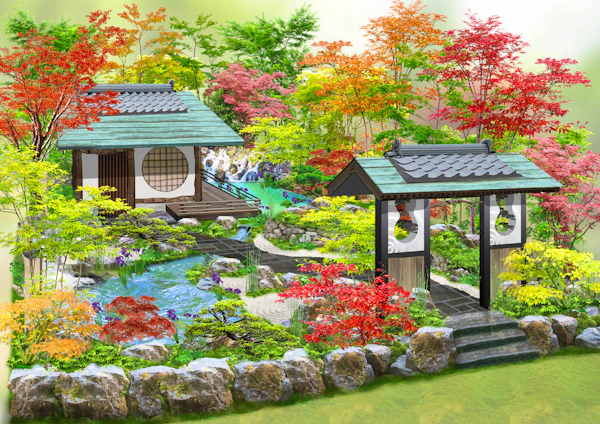
With the descending crowds, Chelsea needs a moment of stillness. This one, by Kazuyuki Ishihara, draws on traditional courtyard design – restrained, precise, and the perfect place to pause.
Beyond The Showground
Just like the borders of the best rambling gardens, Chelsea rarely stays contained within the railings for long. If you're on a post-Chelsea high, head for these floral tributes to extend the delights.
Chelsea in Bloom, 18 – 24 May
Running alongside the show, the neighbourhood itself becomes a kind of open-air installation. Shopfronts, restaurants and hotels compete with increasingly elaborate floral displays, and the whole area takes on a slightly festive air. This year the theme is 'Out Of This World', and you can expect displays in one of London's prettiest pockets that live up to the challenge. It's free, and often more playful than the show itself.
chelseainbloom.co.uk
The Newt at Claridge's
A clever extension of Chelsea's reach, The Newt in Somerset takes over Claridge's with a garden-led installation and dining experience. It brings a touch of the countryside into Mayfair – and offers an immersive way to engage with the ideas behind the show.
thenewtinsomerset.com
Floral Teas & Terraces

Across London, hotels lean into the moment with Chelsea-inspired menus, cocktails and afternoon teas. You could hop along to The Milestone in Kensington, The Dorchester or, our favourite, Petersham Nuersies, whose achingly beautiful surrounds makes it ideal for Chelsea enthusiasts.
FAQs: Chelsea Flower Show 2026
When is Chelsea Flower Show 2026?
Typically held over five days in May, with the first two reserved for RHS members and the latter days open to the public.
Do tickets sell out?
Yes – often well in advance, particularly for public days. Early booking is essential.
What's the best day to go?
Members' days are quieter and feel more considered; later in the week has more atmosphere, but also more crowds.
What should you wear?
There's no formal dress code, but it tends towards smart-casual with a practical edge – think good shoes, and something that can handle both sun and sudden showers.
Is it worth going if you're not a gardener?
Absolutely. Chelsea is as much about design, culture and people-watching as it is about plants – gardening knowledge optional.