

Yet for all its period-drama good looks, Rye, one of the ‘Antient Towns’ in the confederation of the Cinque Ports, is not a museum piece. Behind those ancient façades is one of the most interesting collections of independent shops in the South East – there are cult cloth merchants, decorative antiques, contemporary homewares and vintage finds, interspersed with excellent pubs and restaurants. Better still, almost everything is within strolling distance. (Do note: wear sensible shoes – those cobbles are not forgiving – and allow yourself plenty of time to dawdle.) Here’s how to spend a very stylish day in Rye.
Start At Lamb House
Begin where Tilling aficionados surely must, at Lamb House on West Street. Built in 1723, the handsome Georgian house has a literary pedigree wildly disproportionate to its size. Henry James made it his home from 1897, writing several of his later works here; E.F. Benson followed in 1919 and remained until his death in 1940. It was Benson who transformed Rye into fictional Tilling and Lamb House into Mallards, the coveted residence at the heart of the Mapp and Lucia novels. As you approach, close your eyes and just imagine Lucia herself merrily skipping in the walled garden – or, as she called it, il giardino segreto. Today it belongs to the National Trust and visitors can nose around the rooms and walled garden before emerging onto West Street, suitably immersed in Rye's literary past.
Wander Through Old Rye
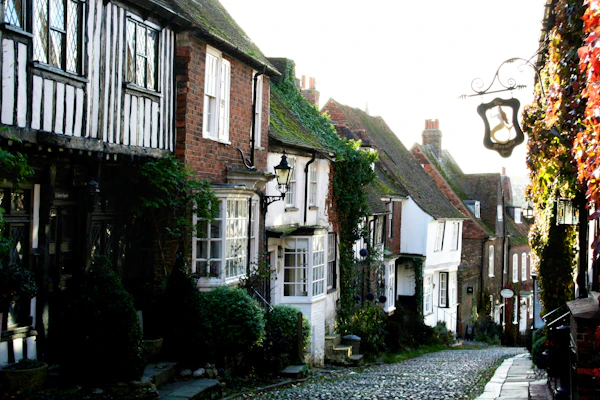
From Lamb House, do not attempt to be too purposeful; half the joy of Rye lies in the pottering. Pass through Church Square and around St Mary's (do look out for the real-life counterparts of several homes belonging to Mapp & Lucia characters) before making for Mermaid Street, Rye's famously photogenic cobbled thoroughfare. We love that it’s lined with wonky timber-framed houses whose names – The House With Two Front Doors, The House Opposite and The House With The Seat – only add to the sense that you’ve wandered into a novel. Peer down whichever tiny passageway looks most promising – even if you get lost, Rye is sufficiently small that you will almost certainly find your way back again.
Nose Around The Shops
Anyone with even a passing interest in sewing will know Merchant & Mills, whose beautiful fabrics, utilitarian patterns and old-fashioned haberdashery have helped stoke – we exaggerate not – a renaissance in dressmaking. Its Rye shop occupies a former toy factory on Tower Street and is something of a pilgrimage site for the sewing-inclined – there are bolts of linen, cotton, wool and denim alongside patterns and beautiful tools, all ripe for the mining. Upstairs, meanwhile, is the brand's sewing studio, where classes and creative retreats are held. There are hundreds of made-up pattern samples to try on, too. Run up a linen chore jacket before supper, anyone?
Conveniently close to Merchant & Mills on Rope Walk is one of Rye's best interiors destinations. Soap And Salvation occupies a beautifully restored former Salvation Army chapel, its vast arched windows and vaulted ceiling providing an appropriately handsome backdrop for founders Jo and Barrie McPherson's excellent finds. Rustic antiques look resplendent side by side with 20th-century furniture, art, lighting, mirrors, textiles and contemporary pieces, all displayed in a pleasingly airy setting. There is also an excellent design-led library and bookshop devoted to art, architecture, fashion and culture.
If Soap And Salvation has whetted the appetite, make next for Puckhaber on the High Street. The family-run antiques business has been sourcing for more than 30 years, travelling across Britain and France in pursuit of French, Swedish and other continental pieces. Expect original painted furniture and gloriously foxed mirrors that’ll have you wondering what you can possibly jettison to make space at home. Interior designers are among its regular customers, which gives you some idea of the calibre of the stock.
It would be positively disrespectful to Rye's literary history not to buy a book while you're here. The Rye Bookshop sits on the High Street and, though now part of Waterstones, retains the feel and name of a local bookshop. Naturally, this is a good place to seek out something with a local connection. Pick up Benson if the morning at Lamb House has piqued your interest, or Henry James if you're feeling more ambitious, before continuing on your way.
Time For Lunch
By now, it’s time for lunch. Hoof occupies a listed building on The Mint and does a good line in hearty cooking – exactly right after a morning spent pounding Rye's cobbles. Meat is the headline act – much of it sourced locally – with excellent burgers, steaks and changing specials making this a decidedly substantial stopping point rather than a dainty refuelling exercise. Relaxed and informal, it’s an especially good option if you have kids in tow.
Resume Your Browsing
Stay on The Mint for Rae, a small lifestyle shop whose rustic vintage homewares sourced across Britain and Europe form the backbone of the collection. (This is then mixed with pieces from contemporary independent makers and a smattering of textiles, candles and accessories.) There is a distinctly sun-baked quality to the aesthetic, all washed linens, vintage rugs and earthy ceramics.
No stroll around Rye would be complete without a good vintage rummage. For this, make your way down towards Strand Quay, where antique shops and dealers cluster around the old waterfront. Among those worth seeking out is Crock & Cosy, selling from Two The Strand, where vintage kitchenalia, domestic antiques and curious old finds provide ample excuse for a dig around.
Afterwards, loop back towards the High Street for The Shop Next Door, another shop so wholly seductive that its changing collection of decorative pieces and good-looking objects means that 'just having a look' can, ahem, prove expensive.
Stop For A Pint
For a town this bijou, Rye punches above its weight when it comes to pubs, the only problem for keen samplers of local ale being the agony of choice. For something characterful, try Rye Waterworks Micropub, housed in a tiny Grade II-listed former water pump house on Tower Street. The building has also served as a soup kitchen and public lavatory in its long life; these days the emphasis is on local ales and ciders, with beer served straight from the cask.
Alternatively, head for The Ypres Castle Inn, known locally as The Wipers, tucked beneath the ramparts by Ypres Tower. Its focus is resolutely on the drink: independent cask and keg beer, local cider and a small, low-intervention wine list, accompanied by cheeses, charcuterie, pork pies and other superior bar snacks rather than a full kitchen. The large garden overlooking the marshes is lovely when the weather plays ball.
Or there is The Ship Inn down on The Strand for a more traditional pub stop, with seasonal food, ales and rooms upstairs.
And, should you fancy straying slightly beyond the prettiest old streets, The Globe Inn Marsh is another good bet for local beer, wine and a changing menu that revolves around regional produce.
Finish At The George
Eventually, all roads should lead back to The George. The handsome sixteenth-century coaching inn on the High Street has long been one of Rye's smartest addresses and makes a fitting final stop. Settle into the Dragon Bar for a glass of English sparkling wine or Sussex ale, or make an evening of it at The George Grill, where the wood-charcoal grill is put to work on Rye Bay seafood, local meat and vegetables. Better still, book one of the bedrooms upstairs and render the question of the last train entirely irrelevant.
Go A Little Further: Camber Sands
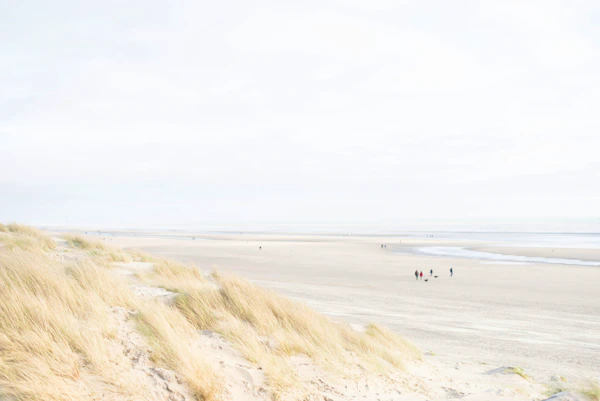
It seems perverse to come this close to the sea without actually seeing it. A few miles east of Rye, Camber Sands provides an exhilarating change of scale after the town's close little streets – there are more than two miles of golden beach backed by the only sand-dune system in East Sussex. Come early or late to miss the summer crowds, or, better still, come in autumn or winter when the beach is made for long, blustery walks. There is a cycle route from Rye and buses connect the town with Camber if you're visiting without a car.
And if one night has turned into a weekend, The Gallivant sits just moments from the dunes. The laid-back coastal hotel majors on local Sussex produce, English wines and warm, relaxed interiors – an appropriately stylish place to wash the sand from your feet and call it a day.
Getting there: Rye is around 1 hour 10 minutes from London St Pancras, changing at Ashford International, and the station is a few minutes’ walk from the old town.
AT A GLANCE
Best For Literary History: Lamb House
Best For A Wander: Mermaid Street & Old Rye
Best For Fabrics: Merchant & Mills
Best For Interiors: Soap And Salvation
Best For Antiques: Puckhaber
Best For Books: The Rye Bookshop
Best For Lunch: Hoof
Best For Homewares: Rae
Best For A Rummage: Crock & Cosy
Best For A Pint: Rye Waterworks Micropub
Best For Sundowners: The George
Best For A Detour: Camber Sands
Best For Making A Weekend Of It: The Gallivant
FAQ: Rye, East Sussex
Is Rye worth visiting for a day?
Absolutely. Rye is compact enough to explore comfortably in a day, with its historic streets, independent shops, pubs and restaurants all within easy walking distance. That said, there is more than enough here – particularly once nearby Camber Sands is factored in – to justify a weekend.
What is Rye best known for?
Rye is known for its beautifully preserved medieval and Georgian architecture, cobbled Mermaid Street and long literary history. Henry James and E.F. Benson both lived at Lamb House, while Benson famously transformed Rye into the fictional town of Tilling for his Mapp and Lucia novels.
What are the best shops in Rye?
Rye is particularly good for interiors, antiques and independent design. Merchant & Mills is a must for fabric and sewing enthusiasts, while Soap And Salvation, Puckhaber, Rae and the antiques dealers around Strand Quay are all worth making time for.
Can you explore Rye without a car?
Yes – in fact, Rye is particularly well suited to a car-free day trip. The historic centre is compact and walkable, and Rye railway station is just a few minutes from the High Street. Buses also connect Rye with nearby Camber Sands.
How long should I spend in Rye?
Allow a full day if you want to browse the shops, have lunch and stop for a drink without rushing. Stay overnight and you can add Camber Sands, a longer dinner and another leisurely wander the following morning.
When is the best time to visit Rye?
Rye is lovely year-round, though spring and autumn are particularly good for exploring without the height-of-summer crowds. Winter suits its crooked streets and old inns rather beautifully too – and provides an excellent excuse to spend longer in the pubs.