

Advice on quilt care can be hard to find. At The Sewing Studio, a team of sewers and quilters have been working with quilting fabrics for over twenty years, handling everything from pre-cut Jelly Rolls to king-size patchwork projects. When you spend your days cutting and working with fabric, you develop a feel for what keeps quilts looking their best and what can degrade them over time.

Know what you are working with
Good care starts with understanding what your quilt is made from. The vast majority of patchwork and quilting fabrics are quilting-weight cotton: tightly woven and made to last. A well-chosen quilting cotton from a reputable manufacturer will hold its colour and structure through years of regular use and washing.
The wadding inside your quilt matters just as much as the fabric on top. Cotton wadding breathes well, washes without distortion, and softens naturally over time to give finished quilts that flat, supple quality associated with antique patchwork. Polyester wadding is lightweight and quick to dry, which makes it a practical choice for everyday quilts in high-traffic rooms. Wool wadding is wonderfully warm and also breathable but it requires more careful handling during washing. Knowing what is inside your quilt will save you a great deal of worry when the time comes to launder it.
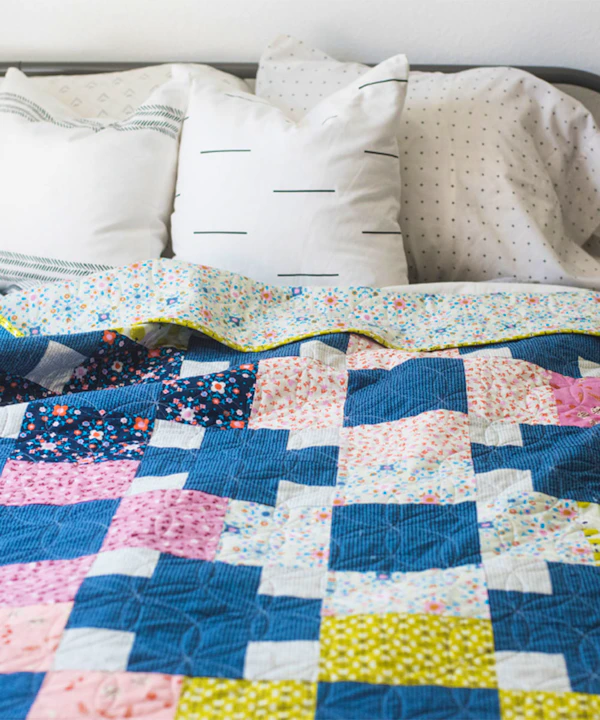
Backing fabrics, bindings and threads all play a role too. A quilt is a layered construction and the weakest element will show its age first. Using quality thread and a fabric backing with a similar weight and care profile to your patchwork top will keep the whole piece ageing evenly and gracefully.
Practical habits that make the difference
The single most useful habit is also the simplest: wash your quilt less often than you think you need to. Quilting cotton is durable but every wash is a small stress on the stitching and the fibres.
Washing
Spot cleaning is a good way to remove marks or dirt - gently blot the stain using a gentle detergent rather than rubbing it, working from the outside edge inwards.When you do need to launder it, a gentle cycle will help to protect the seams and preserve the colour. You won’t always know what a batting or wadding has been used in a quilt if you did not make it so use a gentle detergent suitable for delicate fabric. Select the handwash setting on your washing machine and wash at a low temperature.

Drying
Never tumble dry a quilt on a high heat setting. The combination of heat and agitation is the fastest way to distort the wadding and stress the seams. A low heat tumble or, better still, drying flat on a clean surface or draped over a line in a shaded spot will keep the shape intact.Storage and long-term care
Storage deserves more thought than most people give it. Folding a quilt in the same place every time will eventually leave a permanent crease along the fold lines. Rolling the quilt loosely around a tube, or refolding it in a different configuration each season, will prevent this. If you are folding rather than rolling, placing a layer of tissue between the folds helps to cushion the fabric and protect against long-term creasing.Choose breathable cotton storage bags or pillowcases over plastic, which traps moisture and can lead to mildew. Keep stored quilts away from direct light, which fades even the most colourfast quilting cotton over time.
Airing
Air quilts outside on a dry, breezy day, ideally draped over a line or railing. Avoid strong, prolonged direct sunlight, which can fade fabrics — a few hours of indirect light and fresh air is usually enough. Fresh air helps remove stale odours and moisture that can build up in stored quilts. Sunlight and moving air naturally refresh the fibres without the need for frequent washing, which can be hard on delicate stitching.Airing them allows trapped dampness to evaporate, helping prevent mustiness, mould or mildew, particularly in natural fibres. Fresh air and light can also help discourage moths and other fabric pests especially when quilts are taken out of long-term storage.
Mend it, don't set it aside
A quilt that has been lovingly mended is not diminished by it - it enhances their character and story. Each repair becomes part of its timeline — a small record of the people who cared for it. A loose binding caught early takes a few minutes to tack back down. A small area of fraying at the edge of a block, reinforced with a careful line of hand or machine stitching, will stop the damage spreading and add years to the life of the piece.
This is where knowing how to use a sewing machine, even for basic tasks, becomes a genuine form of care. A machine makes quick repairs straightforward, which means small fixes happen before they become bigger problems.
The same applies during the making process: sewing accurate quarter-inch seams, pressing each one carefully and choosing a needle suited to the fabric weight all contribute to how well a quilt holds together over decades of use. The "make well, care well" approach is not just about what happens after the quilt is finished. It starts with the decisions you make while it is still in pieces on the cutting table.
A little knowledge goes a long way
The best thing about caring for quilts is that it does not need to be complicated. A few good habits, a basic understanding of what your quilt is made from, and a willingness to pick up a needle or iron when needed will keep it looking beautiful for years.
The team at The Sewing Studio are always happy to help with advice on fabric choices, quilting techniques or finding the right sewing machine for your projects.
By The Sewing Studio