

Raised in Wembley and trained in the no-nonsense, from-scratch school of cooking at her mother’s side, Ren’s relationship with spices is steeped in heritage, instinct, and a deep respect for flavour. After being made redundant while pregnant, she turned that knowledge into a business via which she now works with everyone from ambitious home cooks to Michelin-starred chefs. Here, Ren explains why most curries fail, why supermarket spices don’t stand a chance,, and how a simple change in your cupboard can transform the way you cook forever.
How did your route into Indian cooking begin?
I was taught to cook by my mum. I call it the school of ‘how to be’ in the kitchen. No proper instructions, no recipes, just being told what to do and being told off good and proper if it wasn’t done properly or in a timely fashion. We had no choice but to be by her side, helping her with everything. My mum also made everything from scratch, which was an education in itself – funny because back then all I wanted was the processed food and junk that my friends were eating. I am grateful every day for the knowledge she has imparted to me and I continue to cook and ‘be in the kitchen’, just like she taught me.
What led you to start teaching back in 2004?
I was made redundant when I was pregnant with my daughter, Monica, who is now 22. Even though I was devastated that I had lost my job, I knew I wanted to have my own business and for it to have something to do with food. I spoke with everyone about what I should do, and a friend said, ‘Why don’t you teach people to cook Indian food? You’ll be very good at it!’ What you should know is that I was already teaching! I had an open kitchen, so when guests came for dinner, I would go through how I made the dishes and even get them to fill samosas and make chapattis. A lot of pre-dinner fun!

What do you think most people struggle with when cooking Indian food at home?
There are three elements that students struggle with. Firstly, it is that they really don’t know what they are doing with the spices. There is no baseline teaching of how to temper spices for example – students are imagining what they should be doing rather than knowing how to master the technique and process. Information and instructions on the TV and online are more than often incorrect.
Secondly, it’s that the quality of spices is often so poor that the curry has little chance of tasting any good. And finally, the recipes themselves can be really complicated and need to be broken down into stages, so they are easier to follow. I have the ‘fall out’ of all the disasters that cooks have faced during their Indian cooking and spice journeys, so I have made it my mission to fix it and to help people learn to use spices properly and confidently.
When did you realise that one of the problems for home cooks was the quality of their spices?
Students spill their cooking woes to me all the time, describing curries that are bland and sad. Very often they cited a distinct lack of flavour and a sandy texture in their dishes. I was curious as to why this was happening, when most of my students are capable cooks, and very able to make other cuisines. Why was Indian food such a sticking point? I started to ask my students to bring their spices to me. Once I saw and tasted what they were using, the penny dropped. It was not that my students are bad cooks, they were just using bad spices! The proof is in tasting the difference in the quality of my spices versus what they were using. I was utterly shocked and horrified that supermarkets were selling these sad looking and flavourless spices.
How did Ren’s Pantry come about, and what gap were you trying to fill?
I had taught numerous chefs in my cookery school and, by way of consulting, food manufacturer’s. I had always classed myself as a ‘home cook’ and I put chefs way above me on the knowledge and ability scale. Having chefs telling me that my spices were amazing and that what I was teaching them was ground-breaking led me to want to change ‘dry stores’ in restaurant kitchens. I wanted to disrupt the industry and give them more choice as to what they could order and the way that they ordered, offering smaller quantities if they wanted, and in plastic-free packaging. I also wanted to be able to educate them with spice knowledge via my spice masterclass.

What is the difference between a great spice and a supermarket one?
How long do I have to answer this one?! There is little or no development for this area in the supermarket. In most cases the jar is worth more than the spice itself. Supermarket spices are of a very low quality and have been pre-roasted. Most taste of nothing at all. Overall, there is a real lack of vibrancy and taste.
How should people tell if a spice is fresh or past its best?
It’s simple: taste your spice! if it tastes of something, keep it. If it doesn’t (you have to be honest with yourself), throw it away or get your money back from where you purchased it. If it tastes stale or of nothing, how on earth will it make your dishes taste any good? Comedian Michael McIntyre has even made a joke of spices having their own personalities as they grow stale and old in the cupboard. Funny yes – but not when you need them to flavour your dishes in the correct way.
Which spices do you think people most misunderstand or underuse?
Turmeric. Most people have no idea that turmeric isn’t a food colouring. Indian food is synonymous with turmeric and staining counters etc, but it’s way more than that and is actually the king and queen of spice. The anti-inflammatory benefits are great – in fact, it’s even used in the vetenary world. Over the past 10 years, serious research has proven that turmeric is a wonder spice. Thanks to my mum and late grandmother, I was taught the health benefits of it from when I was a young child. It can, though, be very bitter and has to be used with care. It is important to buy good quality with has a high potency of curcumin, which is the main active ingredient – and also one that isn’t too bitter. It doesn’t help when there is mis-information out there, such as ‘ turmeric is a poor man’s saffron, which is so far from the truth.
You supply some of the UK’s best restaurants. Tell us how those relationships came about?
I started shamelessly cold calling chefs in the middle of service. I knew nothing about the restaurant world other than eating at them. I got my first break with the Soho House group where I went to give my spice masterclass to a group of fifteen chefs. One thing led to another, and I started to supply them with spices. Once chefs trust you and love your product, they are very loyal and they take you to their new restaurant kitchens when they move. I found that I get on really well with chefs – they think of me as a big sister to them, you could say.
How do you suggest people build a spice collection?
Write a list of the spices you use a lot and then purchase only these to begin with. When you come across a new recipe that requires a new spice, buy it in a smaller quantity until you need it again or fall in love with it and want to use it on everything. My current favourite is vadouvan – it is a powerful and punchy spice blend that was created by the French when they colonised Southern India. My UK chefs love this blend and use it liberally as a finishing spice or, as it was first intended, to run through butter and then serve on fish. As confidence grows, I encourage students and chefs alike to learn to use spices in a variety of dishes, not just for the recipe you purchased it for. For example, you can use garam masala in a curry, but you could also add to tartar sauce for a spicy addition to a fish finger sandwich.
If a reader wanted to start upgrading their pantry today, where should they begin?
Our kitchen essential box is a great starter spice set for all types of cooks. I have personally curated it and chosen the vessels that everything is packed in for ease of use and practicality in the kitchen.
What should people be looking when buying spices?
Spices should look vibrant and alive, full of colour – for example, ground coriander should be green and not brown. Also ground spices should be finely ground and have no sandy texture.
How would you break spices into categories – and when should each be used in cooking?
Spices should be mentally catogorised into the following.
Heat providers: those that add heat, such as cinnamon and black peppercorns.
Aromatics: these are the herbs and spices that add depth to dishes, such as fennel, coriander, cumin, sage, rosemary and thyme.
Offensive: those ingredients that are super important to use but need a little more care, for example salt and turmeric.
How should spices be stored at home?
Spices should be stored in a cupboard where it’s dark. Make sure the containers are air-tight and they they are closed properly after use. Please get rid of those spice racks that sit on counters. The sun will get to them and impact the spices.
If you had to pick your essential spices or blends from your own kitchen, what would they be?
Salt. I cannot live without flaked salt. Malabar peppercorns. Cumin seeds. Turmeric. Ground cinnamon. Vadouvan spice blend. Tandoori masala. Fresh curry leaves.
6 Of The Best: The Tools Ren Could Not Love Without
A Masala Dabba (a round airtight tin with seven bowls). Every self-respecting Indian kitchen has one. It’s not only the perfect way to store your Indian spices, but also to be able to quickly access the ones you need.

An Indian rolling pin – you can’t roll a nice thin chapatti without it!

A pestle and mortar is an essential in the kitchen – I use this to crush spices and nuts.

My hand blender is used to make pastes and sauces all the time, easy to use and very little washing up.

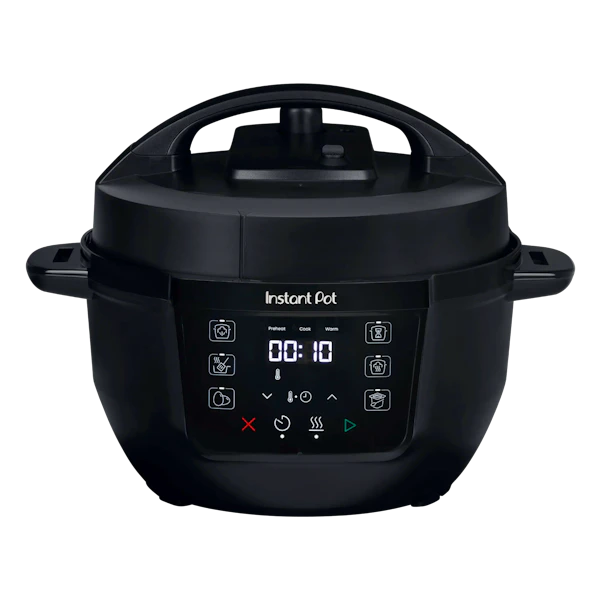
I have four pressure cookers in total and I use them all the time, from cooking chickpeas and other lentils to the perfect lamb curry in 40 minutes Completely time saving!
I use this to make my life a food processor – mine’s a Magimix – to make my life super easy. It chops, blends, purees and it makes the best pastry and dough in minutes.